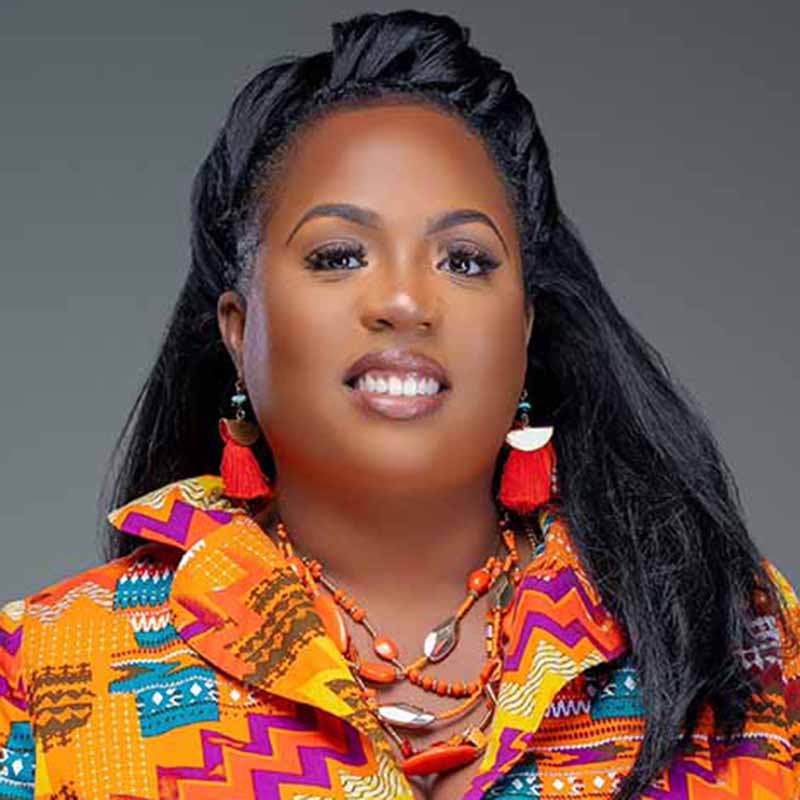
From Survival to Sustainable Wellness: Reimagining Mental Health Through Inclusive Communication

Mental Health Awareness Month has sparked important conversations across workplaces, schools, nonprofits, and communities nationwide. But according to trauma-informed psychotherapist Jeanily Cruz, awareness alone is not enough.

True wellness requires a radical shift in how we think about healing, leadership, communication, and care.

On a recent episode of Elation’s Inclusive Communications Podcast, hosted by Elation Communications Founder and CEO Jerrica Thurman, Cruz delivered a bold and timely message: many people are not truly living—they are surviving. And far too often, our systems, workplaces, and cultures reward that survival mode instead of helping people heal.

As founder of Kai Wellness Collective, an Afro-Latina-led virtual mental health practice serving the DMV and Massachusetts, Cruz is helping individuals and organizations rethink mental wellness through a more inclusive, culturally responsive, and human-centered lens.

This conversation was more than a discussion about therapy. It was a challenge to reimagine what wellness could look like if we prioritized humanity over hustle.

We Have Normalized Survival Mode

Today’s culture celebrates overworking, over-functioning, and pushing through exhaustion as signs of ambition and strength.

Burnout has become a badge of honor.

Many professionals pride themselves on being constantly available, multitasking endlessly, and sacrificing rest in the name of productivity. But Cruz warned that what society often praises as “hustle” is frequently chronic survival mode disguised as success.

“Just because you can hustle in this way doesn’t mean you should,” Cruz explained during the podcast conversation.

For historically marginalized communities, this pressure runs even deeper. Black, Brown, Indigenous, immigrant, and underserved communities have often been conditioned to survive systems that required emotional suppression simply to endure.

Generations have learned:

  • Keep pushing
  • Don’t complain
  • Be strong
  • Don’t rest
  • Don’t slow down

But survival is not the same thing as wellness.

And eventually, the body keeps score.

Cruz emphasized that many people fail to recognize how chronic stress affects the nervous system, sleep patterns, relationships, emotional regulation, and physical health. People continue operating on empty because exhaustion has become normalized.

Her analogy resonated deeply:

“We wouldn’t drive our cars on empty. We should think about ourselves the same way.”

Wellness Was Never Meant to Be Performative

One of the most powerful themes from the discussion centered on the commercialization of wellness culture.

Today, wellness is often marketed as an aesthetic:

  • Luxury retreats
  • Expensive skincare
  • Productivity planners
  • Perfect morning routines
  • Curated self-care checklists

But Cruz challenged the idea that wellness must always look polished, expensive, or performative.

“Wellness should not be adding more,” she explained. “It should really be reducing.”

Sometimes wellness is not another task to complete.

Sometimes wellness looks like:

  • Taking a nap
  • Sitting in silence
  • Logging off
  • Saying no
  • Going outside
  • Slowing down
  • Asking for help
  • Spending time in safe community

In a world obsessed with productivity, rest itself becomes revolutionary.

And for communities taught that rest equals laziness, choosing restoration can feel deeply uncomfortable.

But Cruz made it clear:

“Rest is not laziness.”

That message alone disrupts generations of cultural conditioning around work, worthiness, and exhaustion.

Healing Requires Psychological Safety

The conversation also explored a growing issue in modern workplace culture: organizations publicly supporting mental health while privately sustaining environments that create burnout.

Too many workplaces promote wellness campaigns while rewarding overwork behind the scenes.

Cruz believes meaningful wellness cannot exist without psychological safety.

“Most people are performing at work because they don’t feel like they can talk about their mental health challenges in the workspace,” she shared.

Psychological safety means creating environments where people:

  • Feel heard
  • Feel respected
  • Can communicate honestly without fear
  • Are not punished for setting boundaries
  • Can express burnout before reaching crisis mode
  • Feel emotionally protected by leadership

This requires more than offering an Employee Assistance Program or hosting a wellness webinar once a year.

It requires leaders to examine:

  • Unrealistic workloads
  • Toxic productivity expectations
  • Leadership communication styles
  • Emotional suppression in workplace culture
  • Policies that reward exhaustion

“You can’t promote wellness and also reward burnout,” Cruz emphasized.

That statement challenges organizations to move beyond performative support and toward structural accountability.

Inclusive Wellness Means People Feel Seen

At the heart of Cruz’s work is a simple but transformative idea:

People heal better when they feel seen.

As an Afro-Latina therapist, Cruz intentionally created Kai Wellness Collective to reflect the communities often pushed to the margins of traditional mental health systems.

“I wanted to create a space where folks can have access to mental health care that’s really specific to the nuances that come with being from various cultures,” she explained.

For many historically underserved communities, barriers to mental health support extend beyond affordability. They include:

  • Cultural stigma
  • Lack of representation among providers
  • Language barriers
  • Fear of judgment
  • Feeling misunderstood
  • Lack of culturally responsive care

Inclusive wellness requires organizations and communicators to acknowledge the full humanity of individuals—not just their performance.

Cruz explained that healing spaces should make people feel:

  • Seen
  • Safe
  • Understood
  • Valued
  • Supported without judgment

That level of intentionality transforms communication from transactional to truly inclusive.

Communication Has the Power to Heal—or Harm

Throughout the conversation, Cruz challenged communicators to rethink how mental health is discussed publicly.

Mental health messaging should not simply encourage people to “push through.”

It should normalize:

  • Boundaries
  • Rest
  • Vulnerability
  • Therapy
  • Community care
  • Emotional honesty
  • Sustainable living

Inclusive communication means creating messaging that reflects real human experiences—not polished corporate talking points.

It also means understanding that healing is not linear.

“Therapy isn’t just for crisis,” Cruz explained.

Mental health support can be preventative, reflective, restorative, and ongoing. And conversations about wellness should become as normalized as conversations about physical health.

As Cruz powerfully stated:

“We should be talking about mental health the way we talk about the sky being blue.”

We Cannot Heal in Isolation

One of the most moving moments of the episode came when Cruz referenced author bell hooks and the importance of collective healing.

“We cannot heal in isolation.”

In a hyper-digital world where loneliness, burnout, and emotional exhaustion continue to rise, community becomes essential.

Healing requires:

  • Safe relationships
  • Honest conversations
  • Shared humanity
  • Compassionate leadership
  • Spaces where people can exist fully as themselves

Wellness is not solely an individual responsibility.

It is collective.

And organizations, leaders, communicators, and communities all play a role in shaping whether people merely survive—or truly thrive.

Reimagining Wellness for the Future

The future of mental health communication must move beyond awareness campaigns and inspirational slogans.

It must evolve into:

  • Trauma-informed leadership
  • Inclusive storytelling
  • Sustainable workplace cultures
  • Authentic accountability
  • Culturally responsive care
  • Community-centered healing

At Elation Communications, we believe communication has the power to shape culture. And culture shapes wellness.

That means inclusive communication is not simply about representation—it is about creating environments where people feel emotionally safe enough to heal.

Because the goal should never be to normalize burnout.

The goal should be sustainable wellness.

The goal should be humanity.

And perhaps most importantly, the goal should be creating a world where people no longer feel forced to survive at the expense of themselves.

About Jeanily Cruz

Jeanily Cruz is an Afro-Latina trauma-informed psychotherapist, speaker, and founder of Kai Wellness Collective, a virtual mental health practice providing culturally affirming and holistic mental health care throughout the DMV and Massachusetts. Her work focuses on trauma, identity, nervous system wellness, emotional sustainability, and collective care.

To learn more about Kai Wellness Collective, follow the organization on Instagram, LinkedIn, and TikTok at @KaiWellnessCollective.

Watch this new podcast episode now!

Spread the word…

About the Author

As the President & CEO of Elation Communications, Jerrica drives organizational growth and innovation through strategic partnerships, impactful storytelling, and a deep commitment to empowering teams. Her work, characterized by a blend of strategic vision and operational excellence, has left an indelible mark across various sectors, particularly in supporting individuals with disabilities and advancing educational reforms. She continues to inspire and influence the next generation of leaders, advocating for meaningful change.
The Volunteer Recruitment Email That Doesn’t Read Like a Chore List

The Volunteer Recruitment Email That Doesn’t Read Like a Chore List

It never once explains why any of them are worth a stranger's Saturday morning — and without that, you're not recruiting volunteers, you're posting a chore list and hoping someone feels guilty enough to claim a line item. People don't volunteer because a task needs...

Stay updated with recent news on ways to transform your communications.

Sponsor Ad

Recent News

The Volunteer Recruitment Email That Doesn’t Read Like a Chore List

It never once explains why any of them are worth a stranger's Saturday morning — and without that, you're not recruiting volunteers, you're posting a chore list and hoping someone feels guilty enough to claim a line item. People don't volunteer because a task needs...

Tags