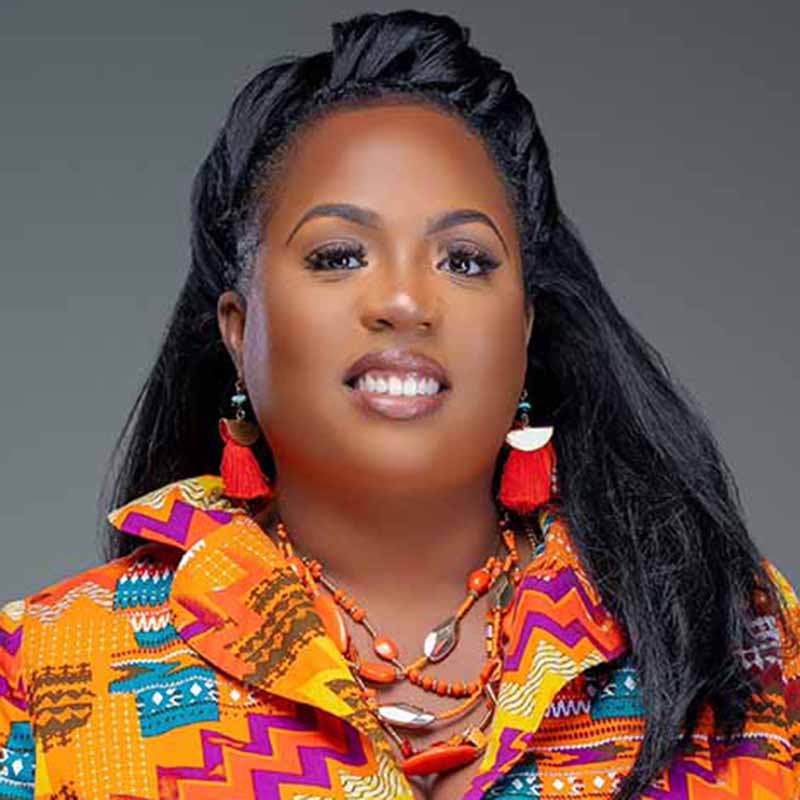
That’s the throughline of this episode of the Inclusive Communications podcast titledTelling the Truth: Juneteenth and the Power of Inclusive Narratives. Jerrica Thurman sits down with historian and educator Dr. Leroy Hopkins to talk about Juneteenth, why it took until the Biden administration to become a federal holiday, and what it actually looks like to tell history honestly instead of just marking a day on the calendar.
Dr. Hopkins illustrates the point with a story from a school visit years ago. A boy walks into class straight from recess, and instead of being wound up from playing outside, he runs to his desk, pulls out a book, and starts reading. It’s a biography of Harriet Tubman. The boy isn’t Black. He’s just completely hooked, and that single image, a kid drawn into a story because it’s a good story, captures exactly what Dr. Hopkins means when he says this history belongs to everyone.
Watch the full episode here: youtu.be/-xMHvbX5zow.
Meet Dr. Hopkins
Dr. Hopkins is a Lancaster, Pennsylvania native with a PhD in Germanic Languages and Literatures from Harvard. He taught at Harvard and Northeastern before spending more than three decades teaching German at Millersville University, retiring in 2015. Retirement hasn’t slowed him down: he’s spent seventeen years on Pennsylvania’s Black History Advisory Committee, served on the board of Pennsylvania Humanities, and continues ongoing work with Lancaster History and the African American Historical Society of South Central Pennsylvania. Most recently, he was elected board president of the Underground Railroad Museum of Pennsylvania.
The museum, opening in Columbia, Lancaster County, will document more than 300 sites and over 2,000 people connected to the Underground Railroad, including routes that carried freedom seekers into Canada, to towns like Chatham, St. Catharines, and Buxton. Dr. Hopkins is especially focused on correcting one gap in the record: the women who fed and clothed freedom seekers once they reached a station, work that’s rarely credited compared to the men who ran those stations. He wants their names restored to the history.
What Juneteenth Actually Commemorates
Dr. Hopkins offers a perspective on Juneteenth that runs counter to the common narrative. He doesn’t believe enslaved people in Texas were entirely unaware of emancipation before June 1865. Word likely traveled, he says, and many already knew the Emancipation Proclamation had been issued back in January 1863. What changed wasn’t the news. It was the arrival of federal troops in a former Confederate state, which finally made freedom enforceable instead of just declared on paper.
“Freedom is not something that is granted to us, it’s something we have to earn,” Dr. Hopkins says, citing a line from Goethe’s Faust. “If we forget that it’s something we have to fight for, we will lose it.”
He connects that idea to his own family history. His ancestor, Abram Warner, served in the 22nd U.S. Colored Troop in Texas but left no written record. “That’s one of the difficulties of doing Black history,” Dr. Hopkins says. “We’re not always literate, and so therefore, our history is sometimes lost.”
Telling the Story Is the Resistance
Much of the conversation focuses on moving past performative recognition, the kind of Juneteenth acknowledgment that amounts to a single social media post and nothing more. Dr. Hopkins is direct about what matters instead: telling the full, unsanitized story is itself a form of resistance against having that history erased.
He points to a small but telling detail. A local bookstore he visits had one shelf with about fifteen Black history books on it nine months ago. On a recent visit, that had grown to at least ten shelves, with one shelf devoted entirely to the history of slavery. “Someone is reading, someone is interested in the history,” he says, and that growth is what gives him hope.
A Story That Reaches Everyone
The boy reading about Harriet Tubman is the clearest example of Dr. Hopkins’ central point: Black history isn’t a niche subject that belongs to one community. It’s American history, and it connects with anyone willing to engage with it. The boy wasn’t drawn in because he saw himself in Tubman’s story. He was drawn in because it’s a great story, someone recognizing a problem and doing something about it to help other people.
“If we teach young people, white, black, brown, about our common history,” Dr. Hopkins says, “I think the future will look better.” He shares a parallel story about his nephew, now in his forties, who still keeps the history books Dr. Hopkins gave him as a child instead of toys. “Everyone needs a hero,” Dr. Hopkins says. The role model doesn’t need to look like the child; it just needs to offer something to identify with.
Practical Ways to Preserve Local History
Dr. Hopkins offers concrete starting points for communities and organizations looking to do this work locally. Juneteenth is a Texas story, but every community has its own history of freedom granted or denied, often sitting in plain sight.
His first suggestion is to start with cemeteries, where a community’s history is written into the stone itself. His own church, Bethel AME in Lancaster, has a cemetery in use from 1817 to 1906 that maps nearly two centuries of community life. His second suggestion is even simpler: record an oral history. With nothing more than a phone, anyone can visit a senior center and ask a few residents what their neighborhood looked like fifty or a hundred years ago. “It doesn’t take a lot of money,” he says. “People my age like to talk about themselves, talk about their history.”
Looking Ahead
Asked what individuals and organizations can do going forward, Dr. Hopkins borrows a line from an unexpected source: Lenin’s advice to students in Moscow to “study, study, and study.” He pairs that with a more personal point, particularly for young people who lack visible role models or a clear sense of what’s possible for them. He’s equally direct about voter turnout, noting that roughly half of eligible voters in the U.S. even register, with a smaller share actually showing up, compared to Germany’s eighty percent turnout. “We pride ourselves on being the greatest democracy in the world,” he says. “Well, show it. Get involved.”
Watch the Full Episode
This conversation is part of Elation Communications’ Inclusive Communications podcast, hosted by President and CEO Jerrica Thurman. Watch the full episode with Dr. Leroy Hopkins here: https://youtu.be/-xMHvbX5zow.
To learn more about Dr. Hopkins’ work, visit the Underground Railroad Museum of Pennsylvania and Lancaster History, which has digitized extensive material on Black history in Lancaster County.